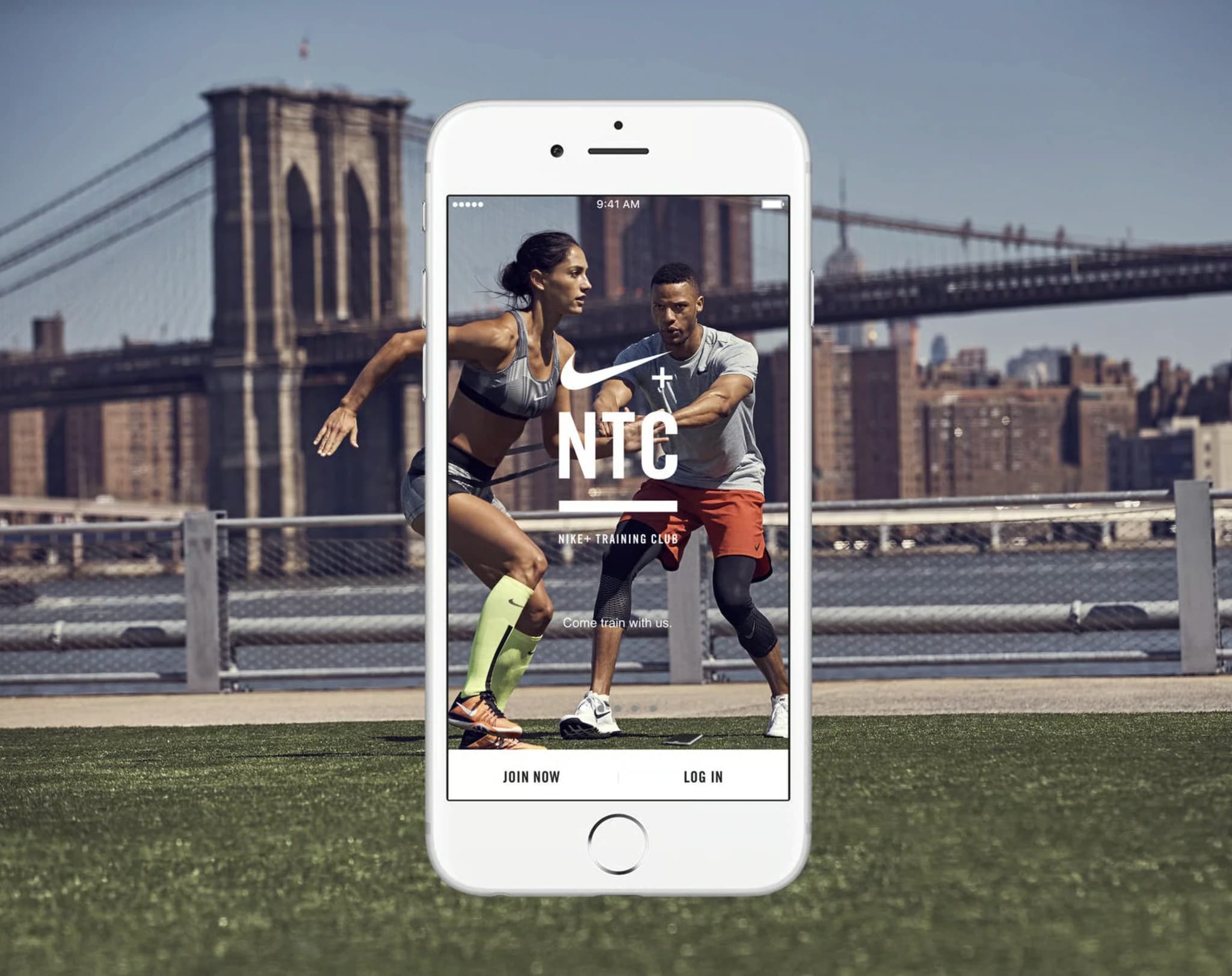
When I joined Nike to work on NTC, the app already had tens of millions of downloads. The challenge wasn't acquisition — it was retention. People downloaded the app with genuine intent and then quietly stopped opening it.
This is the fundamental problem of consumer fitness: motivation is episodic, but habit requires consistency.
The January Effect
Every fitness app lives and dies by January. Downloads spike, engagement peaks, and then — usually around the third week of the month — it falls off a cliff.
Most teams try to solve this with notifications. More pushes, better copy, gamification layers. And it helps, a little. But it doesn't solve the underlying problem: people don't stop working out because they forgot. They stop because working out is hard and life gets in the way, and no one has adequately lowered the barrier to starting again.
Reducing Friction at the Reentry Point
The product insight that shaped my tenure on NTC was this: the most important moment isn't when someone starts a workout — it's when they come back after missing one.
We studied re-engagement patterns carefully. Users who had lapsed for 3-7 days were at a critical inflection point. If they didn't re-engage in that window, their 30-day retention dropped dramatically.
The default experience at that point was to show them exactly where they left off — which was often a hard workout they'd been putting off. That's the wrong answer. Coming back after a break means you need a win, not a challenge.
We redesigned the reentry flow to:
- Acknowledge the gap without shame ("Welcome back — let's ease in")
- Recommend a shorter, achievable workout based on their history
- Remove all metrics and comparisons for that first session back
The result was measurable. Reentry-to-completion rates improved significantly. More importantly, 7-day retention after reentry went up.
Content as Product
One thing NTC got right that many fitness apps miss: content is product. The trainers aren't talent — they're a core product feature. The way a trainer cues a movement, encourages mid-workout, and celebrates completion directly affects whether users come back.
We did extensive A/B testing on trainer cue styles. Authoritative vs. encouraging vs. conversational. The findings were nuanced — different user segments responded to different styles — and we used that to personalize which trainers were surfaced in recommendations.
We also learned that audio quality mattered enormously. Better than you'd expect. A slight reverb in a recording, a room that sounded like a bathroom — users noticed and it affected perceived quality of the entire app.
The Personalization Trap
There's a tendency in consumer apps to over-index on personalization. The thinking is: if we know enough about the user, we can perfectly match content to need.
The reality is messier. People's fitness needs are highly variable — day to day, season to season, life circumstance to life circumstance. Trying to model that precisely led us toward a recommendation engine that was sophisticated but often wrong.
What worked better was structured choice: giving users clear, simple decisions rather than removing all choice. Instead of "here's the workout we picked for you," we had "here are three workouts that fit your time and goal — pick one."
The psychological research on this is clear: people feel better about outcomes they had a role in choosing, even when the choice was guided. It creates commitment and accountability.
Scale Changes Everything
The thing that humbled me most at Nike was working at a scale I hadn't experienced before. NTC had global users across dramatically different contexts: rural areas with limited internet, markets where phone specs were 3-4 years behind, users for whom English was a second language.
Features that seemed simple could have massive reach — and massive failure modes. We had to think carefully about offline functionality, download size, battery consumption, and accessibility in ways that hadn't been as critical on earlier products.
It made me a better engineer-of-product. I think everyone who works at consumer scale should spend time there. It teaches a type of rigor that's hard to learn any other way.