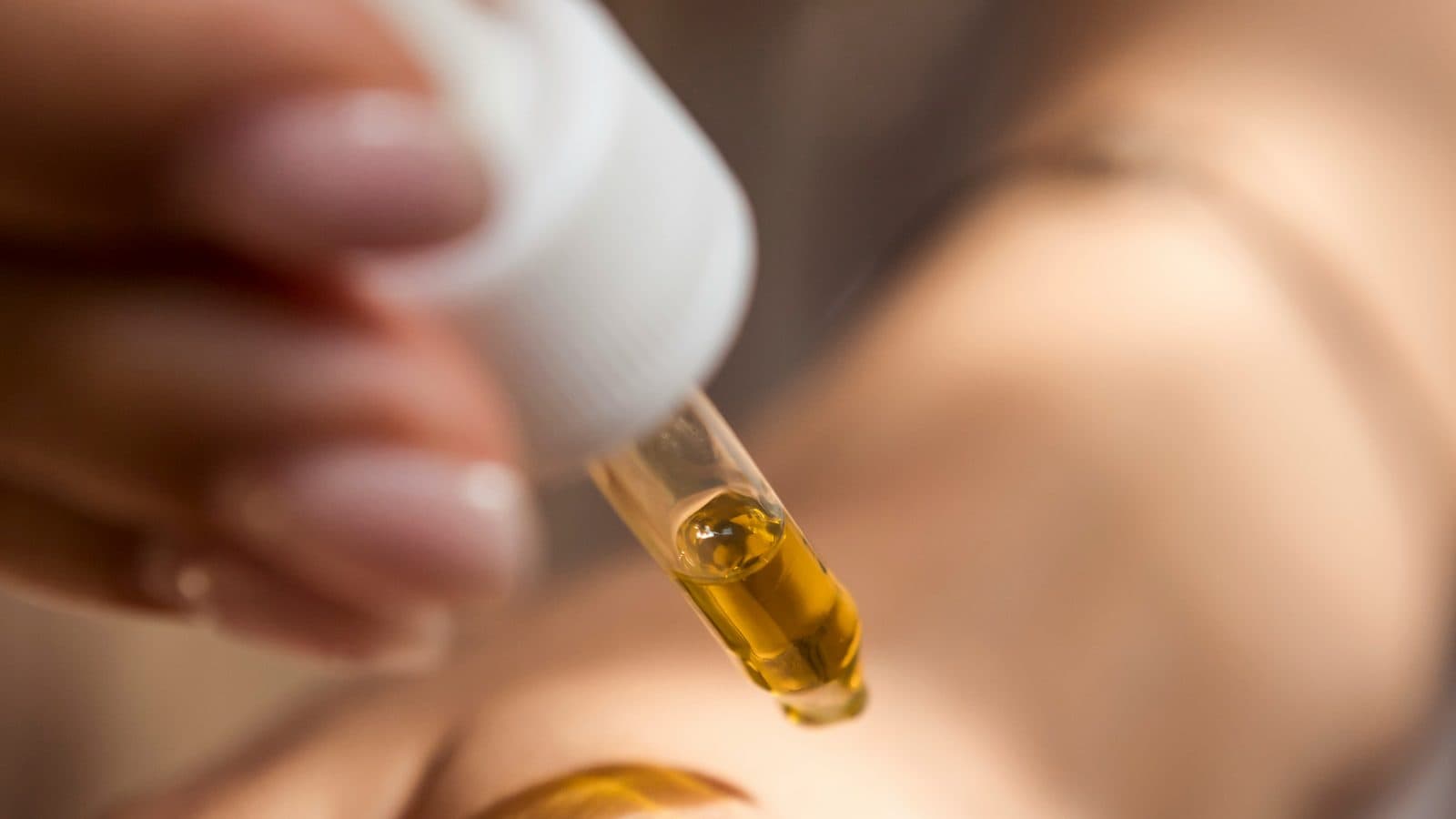
Some prototypes test a feature. This one went hunting for an entire product.
A sensor looking for a home
Near-infrared spectroscopy has lived in industrial settings for decades. Unlike a camera or standard infrared, NIR penetrates organic material and reads its composition from how it reflects light beyond the visible spectrum.
The breakthrough isn't the physics — it's the shrinking. NIR sensors are getting small enough to leave the factory. Wearables are starting to adopt them, and phone makers are circling.
When a sensor gets that small, the question flips from "what can it measure?" to "where does it belong in someone's life?"
Two candidates
The setting: Sephora ran a crowdfunding-style platform for emerging product ideas, and I was building a concept for it (a concept exploration — not a Sephora product). I sketched several directions for consumer NIR, then prototyped the two strongest with Lovable and put them in front of a small group.
The core question for both: does this live in a store as an assessment, or at home in a routine? And would anyone actually care?
Candidate one: Skin Intelligence
A small NIR device pairs with an app and reads your skin — then collapses hydration, elasticity, evenness, and UV exposure into one number you can feel: your skin age against your biological age. Think Whoop recovery or Oura readiness, but for your face.
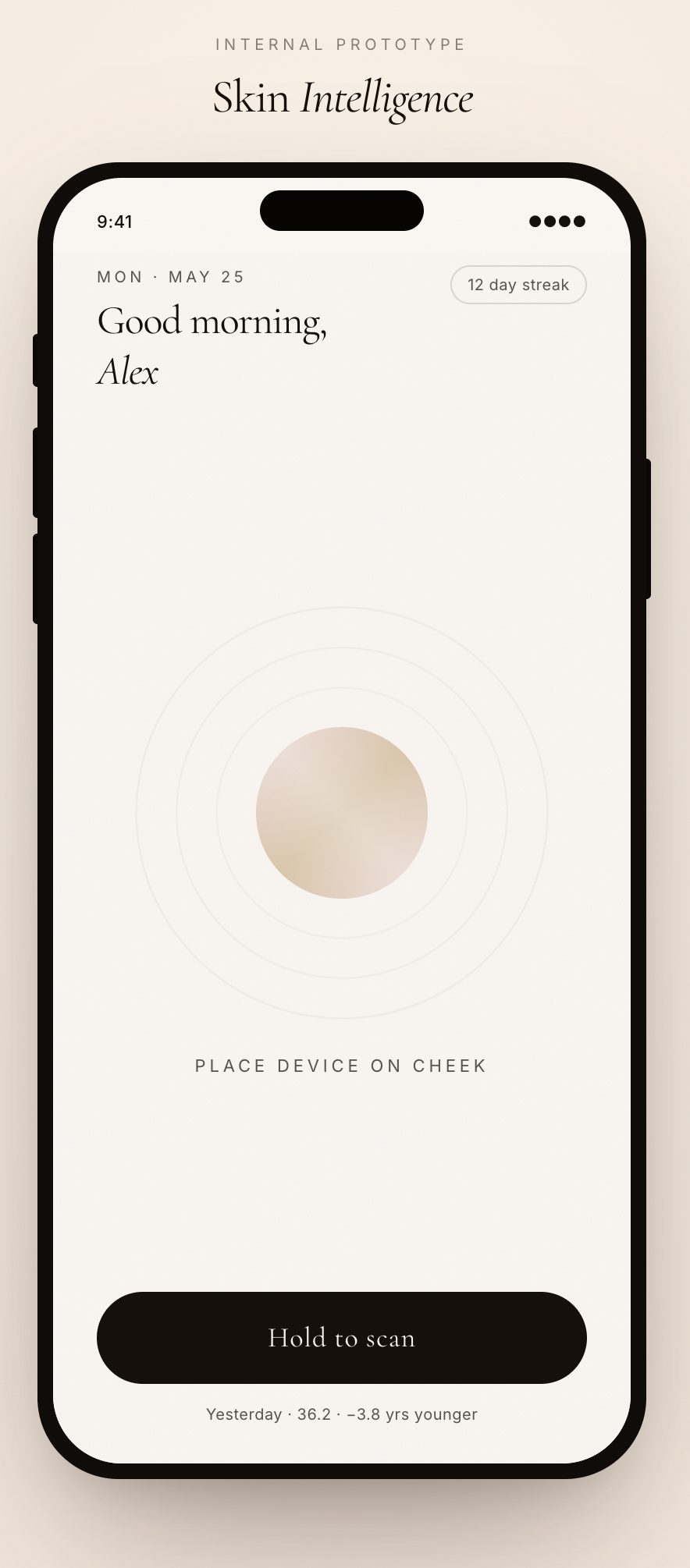
The design choice that mattered: anomalies, not averages. The app surfaces what changed — extra sun, dehydration — and ties it to a single recommended product. That's the loop that connects a scan to a purchase decision.
Candidate two: the food analyzer
Same sensor, pointed at the kitchen: scan your groceries, get freshness scores, cross-reference what your ring says your body needs today.
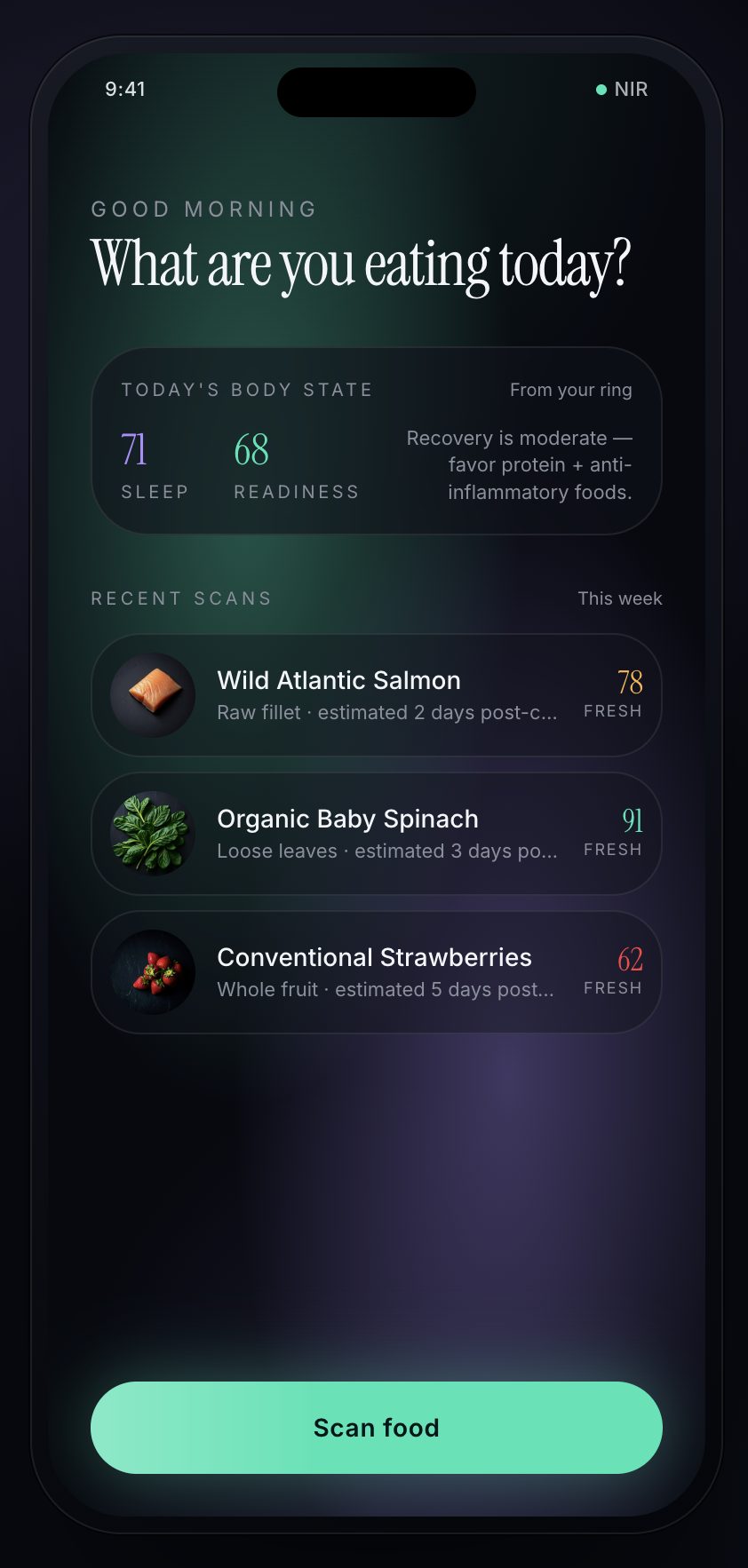
It demos well. And in testing, it died quietly. Nobody could picture themselves reaching for it — not because it didn't work, but because it had no place in their routine. They wouldn't remember to scan their food, and they knew it. No slot in the routine, no product.
The signal
Skin won, decisively.
Testers — women, in this round — immediately connected the scan to real decisions: is this product I already bought actually helping? What should I buy for this condition? Collagen, dryness, and sun damage came up again and again as the layers they wanted read and matched to products.
And the at-home answer beat the in-store assessment: a small device on the vanity, next to the serum, part of the routine.
The point
The sensor hardware isn't ready for a works-like pass yet. That's fine — that was never the question.
Two cheap looks-like prototypes picked a direction before anyone spent a quarter going deep down the wrong path. When the miniaturized hardware is ready, the concept already knows where it's going: skin care, at home, connected to the products people buy.
That's what early prototyping is for — not proving you're right, but finding out which way to walk while the walking is still cheap.