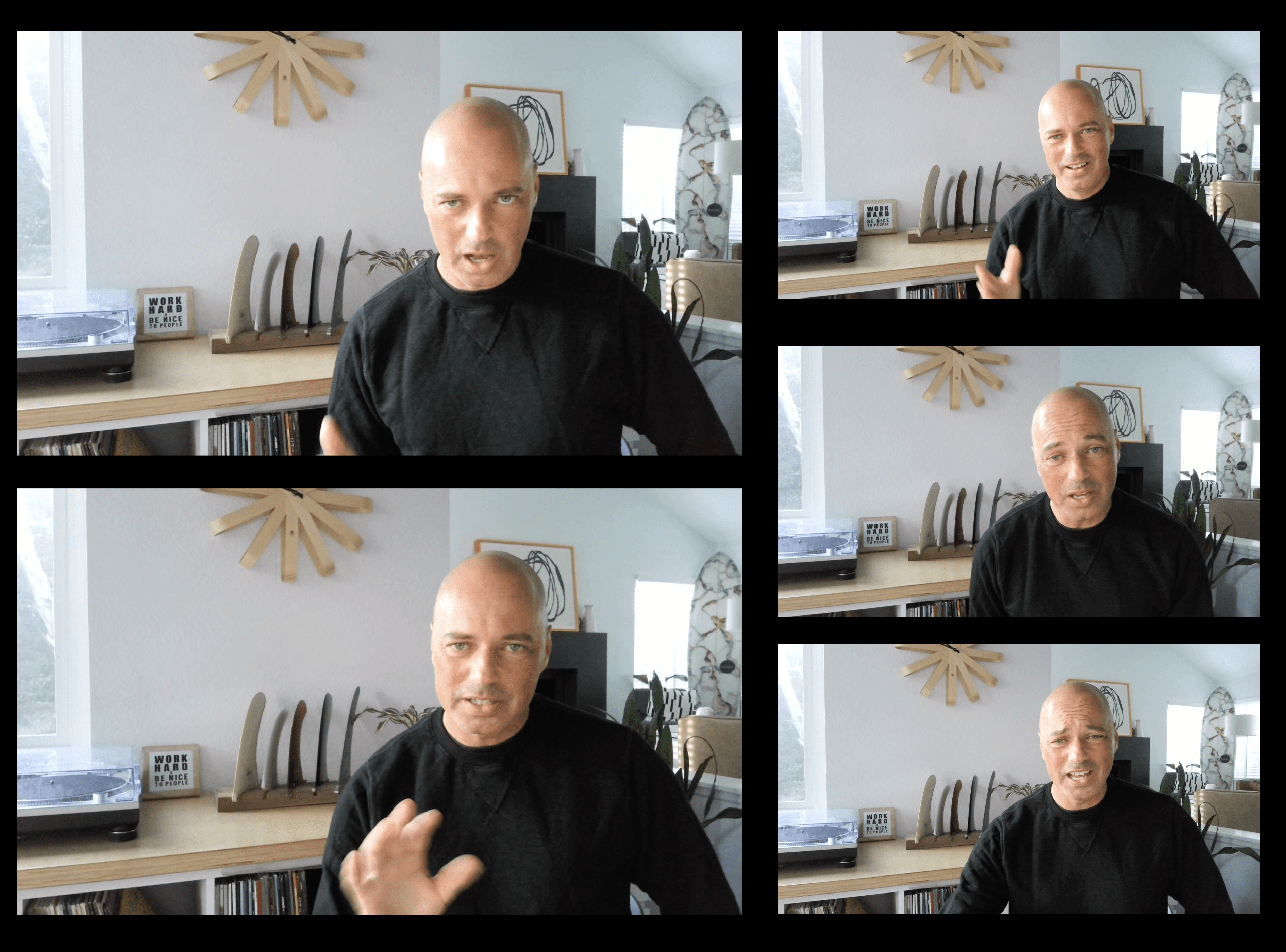
I've spent 20 years building products that help people discover, understand, and engage with the things that matter to them. From the world's first intelligent running shoe to one of the most-used fitness apps on the planet, I've been lucky enough to build things that people actually use.
Here's a bit about how I think about product.
Part Cheerleader, Part Glue
I'm Steve Black. I've built about 15 products across mobile, web, and connected hardware at companies like Nike, Adidas, and Bowflex, as well as several startups. I'm a named inventor on 17 patents in sport, fitness, and technology. And I have a degree in physics, which is a fun way of saying I'm grounded in data and I like solving hard problems.
I think of myself as part cheerleader, part glue. As a cheerleader, I advocate for our users, our team, the vision, and the product. As the glue, I help bind the intersections of digital and physical, technical and creative, art and science. That's where the best products live, and that's where I love to work.
Earning a Place in Someone's Life
I believe the best products earn a place in someone's life. They don't demand attention. They deserve it. And the way you earn that is by solving a real problem in a way that feels simple and human.
I also believe that retention is an experience problem. It's not about tricks or notifications. It's about whether your product is genuinely valuable in someone's day.
At Nike Training Club, we had amazing workout content, but users only showed up when they were working out. The other 23 hours of the day were untouched. So we asked ourselves: how do we make this app valuable in those other 23 hours? That single question changed our entire approach, doubled daily engagement, and drove a 40% increase in workout starts.
That's the kind of thinking I bring to every product I work on. What's the real problem? What does the user actually need? And how do we build something that earns its place?
The Fitness Test Nobody Wanted
Let me give you a quick example of how I work.
At Bowflex, new users were required to complete a full fitness assessment as their very first workout. The assumption was that we needed this data to personalize their experience. Makes sense on paper.
But here's the thing. These users had just spent an hour assembling a treadmill. They were still figuring out how to adjust the seat height. The last thing they wanted was a test.
The data confirmed it. Users were dropping off before they ever started a workout. So I refocused the team on one metric: the percentage of new users who start a workout in their first session. We knew from research that this one moment correlated directly to long-term retention.
We redesigned the experience. Instead of a fitness test, we asked a few light preference questions and served up a handful of relevant recommendations. Get the user to their first win. The fitness assessment became an optional follow-up for when they were ready.
The result: a 21% increase in first-session workout starts and nearly 20% improvement in 12-week retention. One insight, one clear metric, one redesign. That's how I like to work.
AI Changed How I Work
I want to talk about AI for a second, because it's changed how I work in a real way. I use Claude every day for discovery, research, writing, and prototyping. I use Cursor and Lovable for rapid prototyping. These aren't experiments or side projects. They're core parts of my daily workflow.
What excites me about AI isn't that it replaces thinking. It's that it accelerates the path from insight to action. I can test an idea, build a prototype, and get feedback faster than ever before. And that means I can help teams find clarity and ship the right thing sooner.
Let's Make Stuff
Thanks for reading. If you want to see and hear me tell this story, check out the video version below.
You can find me at steveandthedogs.com or connect with me on LinkedIn.
Let's make stuff.